
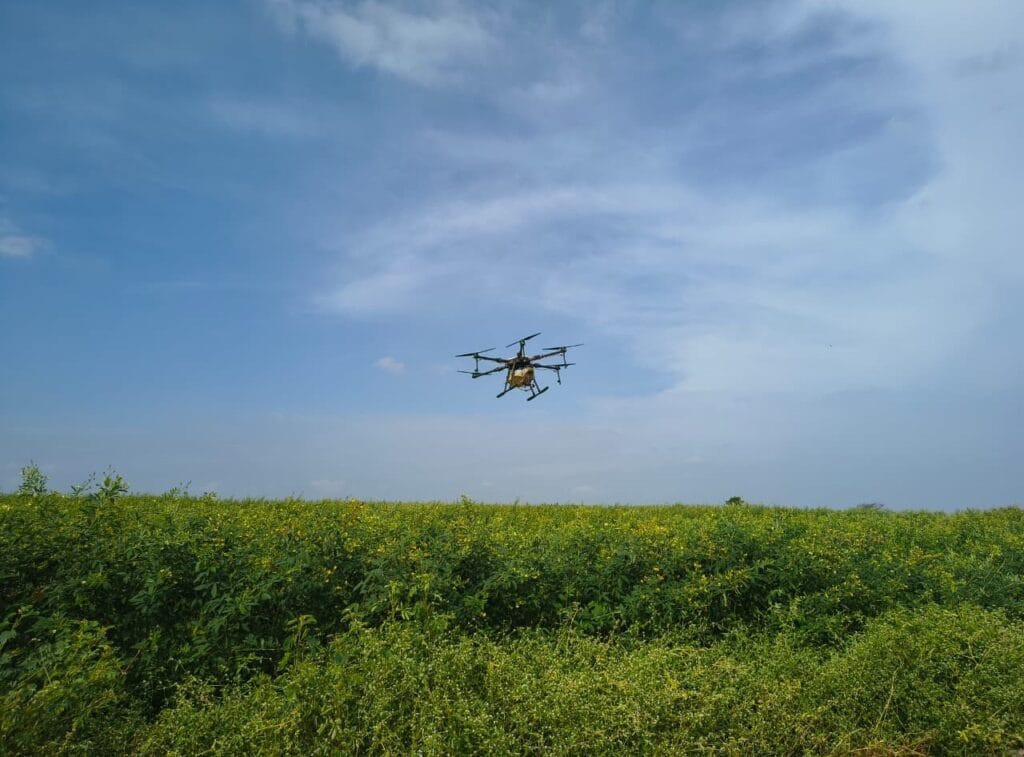
Discover how agricultural drones are revolutionizing modern farming through precision spraying, crop monitoring, and data-driven decision-making. Learn about their types, benefits, and future potential in Indian agriculture.
Introduction
Agriculture is no longer just about soil, seeds, and seasons — it’s about data, precision, and efficiency.
In recent years, agricultural drones have emerged as one of the most powerful tools in the modern farmer’s toolkit. From crop spraying to field mapping and disease detection, drones are helping farmers make smarter, faster, and more profitable decisions.
Let’s understand what agricultural drones are, how they work, and why they’re transforming farming in India and beyond.
What Is an Agricultural Drone?
An agricultural drone is an unmanned aerial vehicle (UAV) designed specifically for farming and crop management tasks.
Unlike regular drones used for photography or delivery, agri-drones are equipped with:
- Spraying systems (for fertilizers, pesticides, and micronutrients)
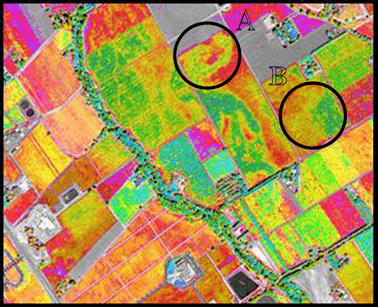
- Multispectral and NDVI cameras (to analyze plant health)
- GPS/RTK navigation systems (for precision mapping)
- AI-based sensors (to automate spray volume and flight path)
These features make them capable of performing agricultural operations with accuracy, safety, and speed.
Types of Agricultural Drones
| Type | Function | Example Use |
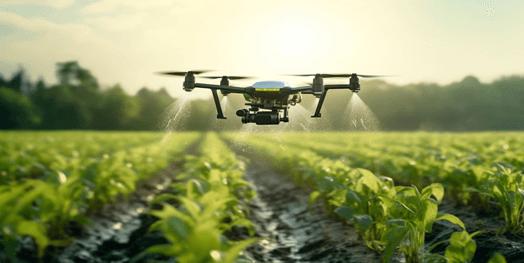
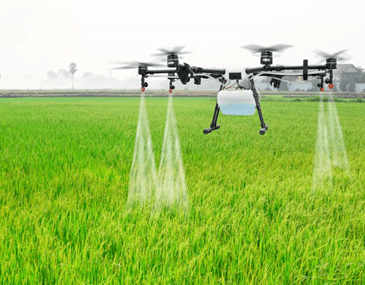
| Spraying Drones | Disperse fertilizers and pesticides evenly over fields | Paddy, cotton, sugarcane |
| Mapping/Survey Drones | Capture aerial images to generate crop health or topographic maps | Land mapping, irrigation planning |
| Multispectral Drones | Analyze plant health using NDVI and thermal data | Disease detection, nutrient management |
| Seeding Drones | Drop seeds over large areas | Reforestation, inaccessible farmlands |

Benefits of Using Agricultural Drones
- Precision Application:
Apply pesticides or fertilizers only where required — reducing cost and crop damage. - Labor Efficiency:
Replace hours of manual labor with a 15–20 minute flight. - Water and Chemical Savings:
Up to 40% less pesticide and 80-90% less water usage. - Timely Crop Health Monitoring:
Detect disease or nutrient stress early through aerial imaging. - Safety for Farmers:
Drones eliminate the need for farmers to handle harmful chemicals directly. - Cost-Effective in the Long Run:
Though initial investment may be high, operational cost per acre is much lower.
Real-World Applications in India
Agricultural drones are now used widely across India for:
- Paddy and wheat spraying in Punjab, Haryana, and Tamil Nadu.
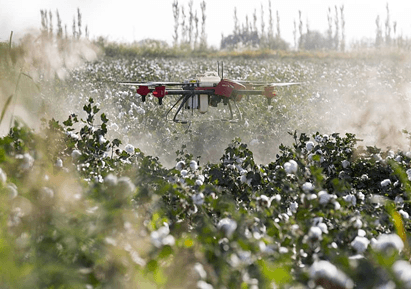
- Cotton pest management in Maharashtra and Gujarat.
- Sugarcane growth monitoring in Uttar Pradesh.
- Banana and horticulture spraying in Andhra Pradesh.
Government initiatives such as the PM Kisan Drone Yojana and subsidies for FPOs (Farmer Producer Organizations) are accelerating adoption nationwide.
The Future of Drones in Farming
The future of agricultural drones lies in AI-driven precision farming. Soon, drones will:
- Detect diseases before symptoms appear.
- Work in swarms for large-scale spraying.
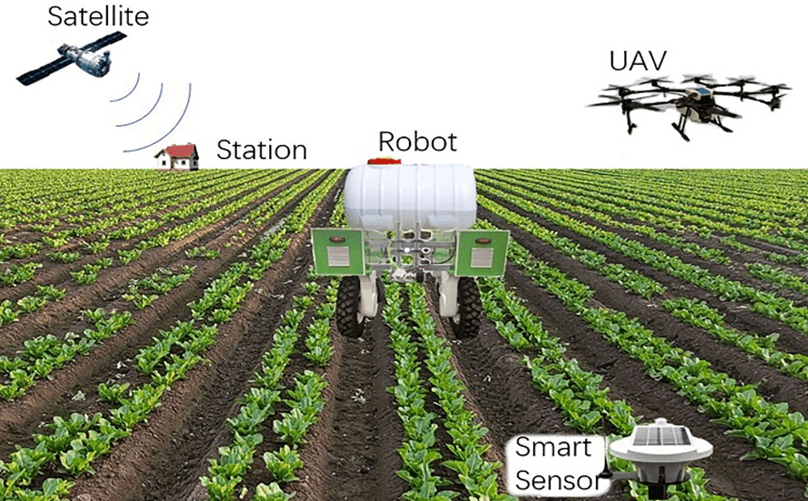
- Integrate with IoT soil sensors and weather data for automated decision-making.
As technology becomes affordable, even small and medium farmers will benefit from drone-based precision agriculture.
Conclusion
Agricultural drones are redefining how we grow food. They bring together the power of technology, sustainability, and efficiency, allowing farmers to produce more with fewer resources.
Whether it’s paddy in Tamil Nadu or cotton in Maharashtra, drones are helping farmers make smarter choices — one flight at a time.
Call to Action
Want to experience precision farming with drone technology?
Contact us today to schedule a demo or learn how our crop-specific spraying drones MD-10H+ can help you increase yield and reduce costs.